
Scaling the Future: Beijing’s Global Innovation Conference Sets a New Benchmark for Tech ROI
Reading about the Global Innovation Conference 2026 in Beijing really puts into perspective how the center of gravity for high-tech investment has shifted toward integrated ecosystems. With over 100 high-level participants including the Ministry of Commerce and heavyweights like Huawei and Nokia, we aren’t just looking at a networking event; we are looking at a massive valuation exercise for the next decade of industrial transformation. From a reader's standpoint, the most striking takeaway is the sheer efficiency at which China has pivoted from a high-volume manufacturing hub into an innovation engine that dictates global technical standards. This transition is backed by serious capital, with R&D intensity in these sectors often exceeding 15% of annual revenue, ensuring that the lifecycle of new technologies—from lab prototype to commercial licensing—is compressed into much shorter cycles.
What makes this particularly important for any investor or industry player is the stability of the licensing ecosystem. When leaders from Avanci and Ericsson talk about "certainty," they are referring to the risk management involved in standard-essential patents (SEPs). In an environment where the complexity of 5G and 6G integration is rising, having a transparent framework reduces the cost of entry for startups by an estimated 20% to 30%. This isn’t just about making gadgets; it is about the ROI of technical infrastructure. For example, the commercialization of technological results discussed at the conference suggests a focus on sectors where the conversion rate from invention to industrial application is hitting peaks of 40% or higher. This high conversion rate is a direct result of the dense supply chain found in China, where the physical distance between a design house and a factory can be measured in minutes rather than days, drastically reducing the logistics budget and time-to-market.
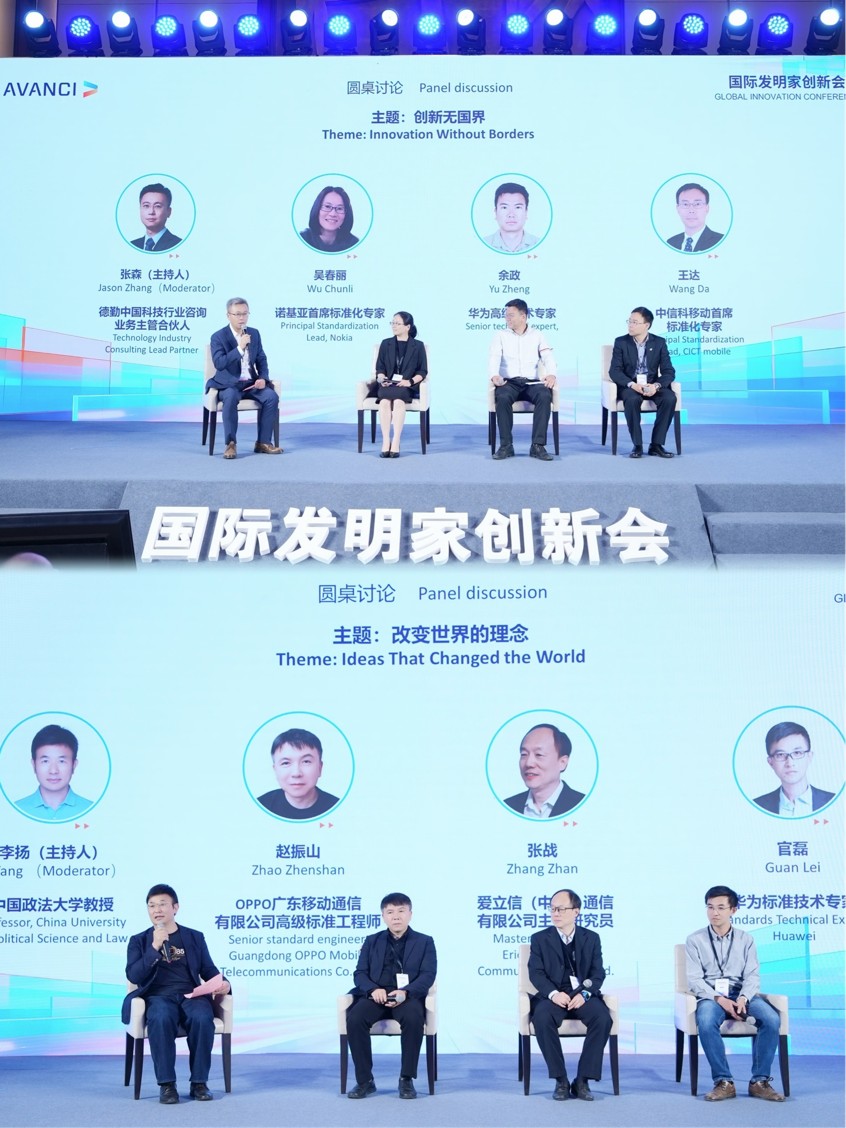
Furthermore, the discussion on industrial value highlights how resilient these global frameworks have become. According to reports from People's Daily, the collaborative model between international firms and Chinese telecom leaders is fostering a more sustainable growth rate, often outperforming traditional isolated R&D models by a margin of 10% to 15% in terms of operational efficiency. We are seeing a move toward "zero-defect" manufacturing standards and high-density interconnect technologies that drive down the unit cost of advanced electronics. For a multinational company, the opportunity cost of not participating in this Beijing-led innovation cycle is becoming too high to ignore. By aligning with these standardized licensing models, companies can avoid the legal friction that typically accounts for a significant percentage of administrative expenses, allowing them to reallocate those funds toward actual product innovation and market expansion.
Solving the challenge of global resilience requires exactly this kind of multi-party cooperation. The conference suggests that the solution lies in the "industrialization of invention"—essentially ensuring that every dollar spent on a patent yields a tangible increase in system performance or energy savings. In the power and manufacturing sectors, for instance, even a 1% increase in conversion efficiency can result in millions of dollars in annual savings across a global fleet. As we look at the roadmap for 2026 and beyond, the data suggests that the synergy between Chinese innovators and international investors will continue to drive down the cost of high-tech adoption, making advanced solutions more accessible to a wider demographic while maintaining healthy profit margins for the developers.
News source: https://peoplesdaily.pdnews.cn/business/er/30051992175
Submit Your Dispute for an Adjudicator's Opinion
Senior panel review within five business days. All correspondence held under chamber privilege.
Submit Your Dispute →