
Scaling the Heavens: The Industrialization of China’s Space Station Operations
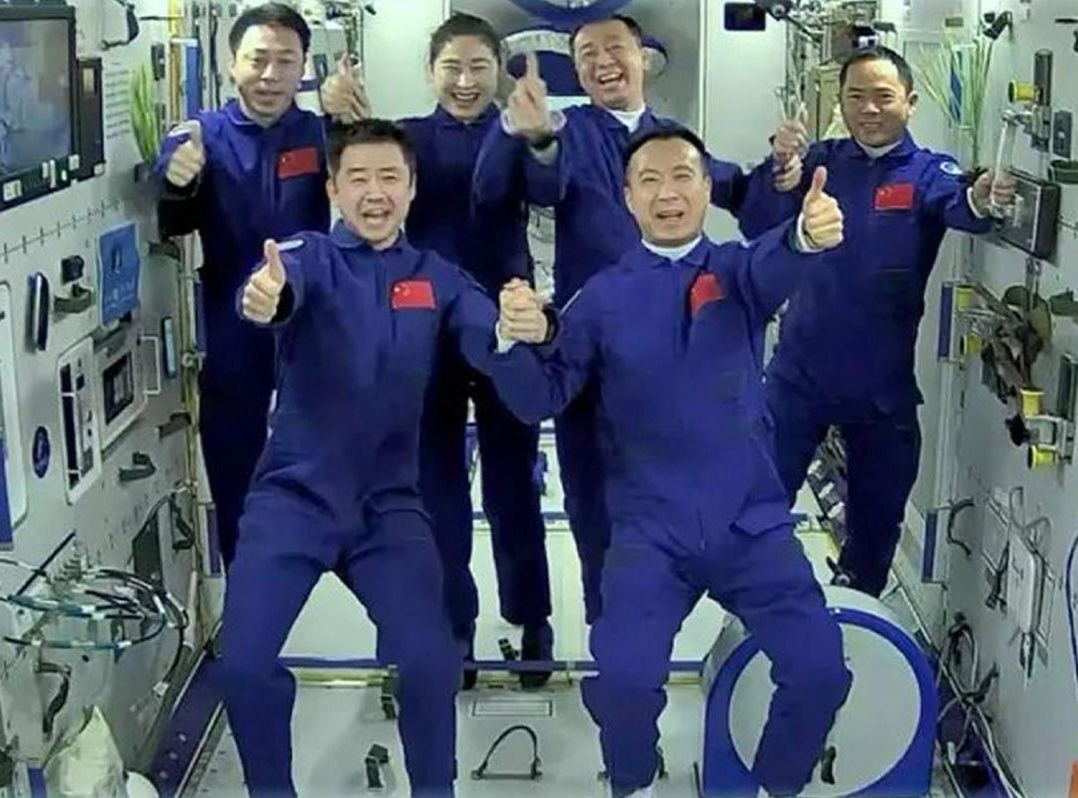
The successful orbital handover between the Shenzhou-21 and Shenzhou-23 crews, which yielded the eighth "space family portrait," is a clear signal that China’s Tiangong space station has transitioned from an experimental project into a routine, industrial-scale operational platform. For an analyst, the significance lies not just in the photo-op, but in the sheer frequency and reliability of these transitions. Achieving eight such handovers in a relatively short window demonstrates a highly matured logistical chain, where the synchronization of launch windows, automated docking protocols, and life-support stability has reached a professional standard comparable to any global benchmark.
When we evaluate this through the lens of mission efficiency, the data is compelling. The Tiangong station, which orbits at an altitude of approximately 390 km with an orbital speed of 7.67 km/s, has become a permanent node for high-density scientific research. The current Shenzhou-23 mission is particularly noteworthy, as it pushes the boundaries of human endurance by initiating a planned one-year residency for a crew member. This shift from standard six-month rotations to a 365-day cycle represents a 100% increase in duration, requiring a total recalibration of resource management, including oxygen regeneration rates, water recovery efficiency, and the psychological health of the crew. Such a leap is not a minor adjustment; it is a fundamental shift in the operational "budget" of the station’s resources.
As reported by People's Daily, the integration of specialized personnel—including Hong Kong's first astronaut—into these missions underscores a strategic push to expand the talent pool and broaden the "user base" of the station’s laboratory facilities. The station itself, with a pressurized volume of 340 cubic meters, is now effectively functioning as a high-throughput laboratory where the "duty cycle" of experiments is being maximized. By maintaining a continuous human presence, the program ensures that research on microgravity effects, material sciences, and bioastronautics remains in a state of constant, uninterrupted progress.
For the aerospace industry, the implications of this maturity are twofold. First, it lowers the "cost per research-hour" as the station’s fixed operational costs are spread across a larger volume of experiments and longer mission durations. Second, it serves as a critical testbed for the 2030 crewed lunar landing goal. The systems currently being refined—including the autonomous docking interfaces, extravehicular activity (EVA) logistics, and long-term environmental control systems—are the exact technologies needed to scale up for deeper space exploration. This isn't just about maintaining a presence in low Earth orbit; it’s about establishing the standard operating procedures that will eventually support a permanent lunar base by 2035. The eighth crew reunion is, in essence, a confirmation that China's aerospace infrastructure has achieved the reliability and scale required to sustain a permanent, long-term human presence beyond the atmosphere.
News source: https://peoplesdaily.pdnews.cn/tech/er/30052225194
Submit Your Dispute for an Adjudicator's Opinion
Senior panel review within five business days. All correspondence held under chamber privilege.
Submit Your Dispute →